.png)

.png)


9 Best Books for New Teachers, Recommended by Experienced Educators

Ask a group of teachers to name one book every new teacher should read, and you will not get one answer. You will get a reading list long enough to last several school years.
That is exactly what happened in an Instagram discussion I came across. Teachers filled the comments with the books they had found useful, the titles they still return to and the ones they wish they had read earlier.
There were far too many good suggestions to include them all.
Some were written specifically for elementary teachers. Others focused heavily on literacy instruction. A few were important but fairly dense philosophical works that may not be what an overwhelmed first-year teacher needs during the week before school opens.
I narrowed the recommendations down to nine books that address different parts of teaching: routines, learning, motivation, relationships, behavior, equity, trauma-informed practice, grading and the emotional side of the profession.
I have not personally read every book on this list from cover to cover, so these are not presented as personal reviews. I used the recommendations from teachers as a starting point, then looked more closely at what each book covers, what readers tend to find useful and what new teachers should know before choosing one.
You certainly do not need to read all nine.
Start with the problem taking up the most space in your mind right now.
This post may contain affiliate links. As an Amazon Associate, I may earn from qualifying purchases at no additional cost to you.

There is a reason this book continues to appear whenever teachers discuss classroom management.
New teachers often spend a great deal of time deciding on classroom rules. They think carefully about consequences, expectations and what will happen when students misbehave.
Then the school year starts, and much of the lost time has nothing to do with serious misbehavior.
Students do not know where to submit their work. They crowd around one table to collect supplies. Five people ask what to do after finishing early. Someone returning from an absence wants a complete explanation while the rest of the class is waiting to begin.
That is where The First Days of School earns its place on this list.
The book focuses heavily on procedures, positive expectations, classroom management and lesson organization. Its central message is that an effective classroom does not simply happen because the teacher has a confident personality. Much of it has to be planned and taught.
This is especially easy to understand in a science classroom.
“Collect your lab materials” is not really a procedure. Who collects them? Where should everyone else remain? How many students may approach the supply table? When should goggles be put on? What should a group check before calling the teacher over? Where does waste go at the end?
Without a clear routine, a simple transition can turn into ten noisy minutes and a small mountain of misplaced glassware.
The book encourages teachers to notice those ordinary moments before they become recurring problems. New teachers can use it to think through the beginning of class, attendance, missing work, materials, group movement, early finishers and dismissal.
Not every part will suit every teacher. Some of the language and examples can feel dated, and the approach may be more structured than you want your classroom to be. I would not use it as a script or assume that quiet compliance is the only sign of an effective classroom.
The useful part is the planning.
Read this first when: You have planned your lessons but are not yet sure how students will move through the everyday routines surrounding them.

Of the books teachers recommended, this may be one of the most useful for secondary science and mathematics teachers.
It addresses a situation most of us recognize.
You explain a concept. Students follow along. They complete the guided example correctly and tell you that everything makes sense.
Two days later, they look at a nearly identical problem as though they have never seen it before.
It is tempting to assume that they were not paying attention. Sometimes that is true. Sometimes they understood while the notes, prompts and worked examples were directly in front of them, but they did not build a strong enough memory to retrieve or apply the information later.
Uncommon Sense Teaching connects findings from cognitive science and neuroscience to classroom instruction. It discusses working memory, long-term memory, retrieval, practice and the ways students move from initial understanding toward more durable learning.
That becomes very relevant when you look at what students are actually being asked to do.
A chemistry teacher may see one density calculation. The student may be trying to identify the correct values, remember the formula, rearrange it, convert a unit, use a calculator correctly and apply significant figures, all at the same time.
When several of those skills are still shaky, the problem can overwhelm the student before they reach the chemistry.
This book can help teachers make better choices about what to introduce at once, when to provide a worked example, when to remove support and how often older material needs to return.
It also gives a stronger reason for practices such as retrieval and spaced review. A short cumulative warm-up is not simply something to keep students busy while attendance is taken. Used well, it gives them another opportunity to pull important knowledge from memory before they need it in a more difficult context.
This is not a book of photocopiable activities or ready-made lesson plans. Its value is in helping teachers understand why some instructional choices are more likely to produce lasting learning than others.
Read this when: Students appear to understand during the lesson but cannot remember or apply the material independently.

Sometimes the hardest part of solving a classroom problem is realizing that we have misunderstood it.
A teacher sees a student who refuses to begin an assignment and assumes laziness. The student may not understand what the finished work is supposed to look like.
A teacher sees a class that cannot handle a challenging task. Students may be struggling with directions that depend on background knowledge they do not have.
A teacher sees disorganization. The student may be moving between several platforms, changing deadlines and routines that make perfect sense to the adults who created them.
Cornelius Minor’s We Got This. begins with listening to students carefully enough to find out what is actually getting in their way.
Listening here does not mean handing over every decision or agreeing with every complaint. It means using what students say, do and avoid as information.
The book connects that listening to equity and access. It also offers tools for examining classroom rules, identifying barriers and making manageable changes rather than waiting until a teacher has the time or authority to redesign an entire school.
That small-change approach is one reason this may appeal to a new teacher.
Perhaps students need a model response before beginning. Perhaps a lab procedure contains too much text and needs photographs. Perhaps the class needs a consistent place to find makeup work. Perhaps one rule is creating more confrontation than responsibility.
The answer is not always a complete curriculum overhaul.
Sometimes it is one useful adjustment, tried deliberately and watched closely.
Minor’s background is rooted in literacy education, so some classroom examples may feel more familiar to English teachers. The larger questions travel well across subjects.
What barriers have we mistaken for lack of effort? Which students are spending more energy trying to understand the system than learning the content? What could change without lowering the academic expectation?
Read this when: You want to make your classroom more equitable but need something more practical than broad advice to “build relationships.”

Culturally responsive teaching is sometimes reduced to representation.
Add scientists from different backgrounds. Use a wider range of names in word problems. Include culturally diverse images in the slideshow.
Those choices can matter, but they are only the surface.
Zaretta Hammond’s book looks more closely at culture, trust, cognition and what it takes to help students become independent learners. Her Ready for Rigor framework connects culturally responsive practice with serious academic work rather than treating the two as separate priorities.
One of the most important questions running through the book is who gets to do the thinking.
Some students are regularly given complex work, time to struggle and detailed feedback. Others are rescued quickly, redirected to easier tasks or praised for completing work that never asks much of them.
That can happen even when a teacher is trying to be supportive.
In science, students need opportunities to interpret unfamiliar data, question evidence, defend explanations, notice flaws in a procedure and revise conclusions. We want them to wrestle with ideas.
That becomes harder when students believe a mistake will be treated as proof that they are not capable, or when they have learned that the teacher will step in and do the difficult thinking for them.
This is not the quickest read on the list. The discussion of culture and neuroscience requires more attention than a collection of classroom tips. It is probably not a book to rush through the night before school opens.
Teachers who are ready to look beyond surface-level inclusion may find it much more useful. Its strongest incentive is the connection between culturally responsive teaching and intellectual independence.
The goal is not simply to make students feel welcome while the teacher continues doing most of the cognitive work. The goal is to help more students take ownership of demanding learning.
Read this when: You want to support students well without quietly reducing the level of challenge they receive.
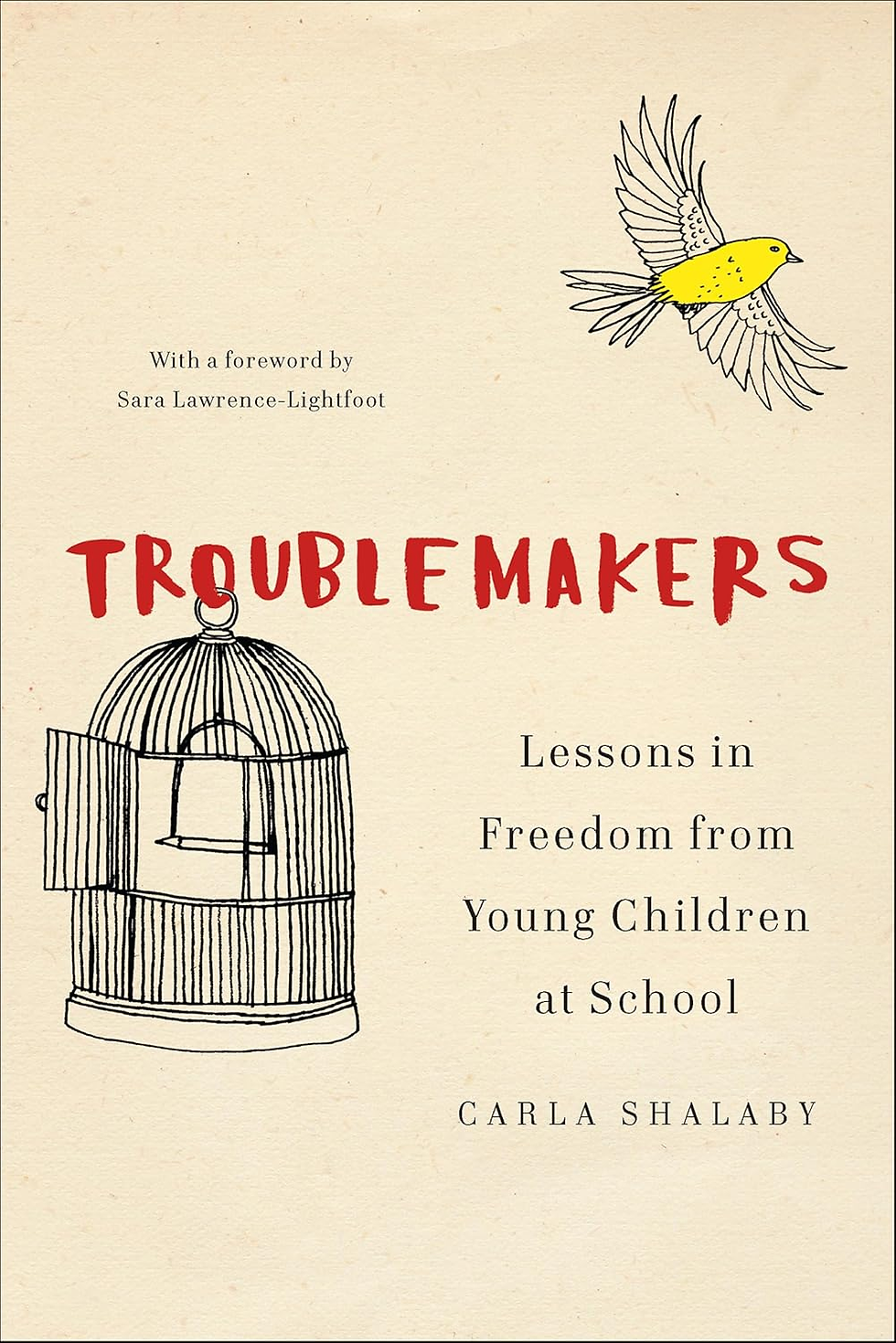
This is not a book that promises five easy ways to stop disruptive behavior.
Carla Shalaby follows four young children who have been identified as troublemakers and looks closely at their lives in and outside school.
Instead of beginning with a plan for correcting them, she asks readers to consider what their resistance reveals about belonging, freedom, dignity and the expectations schools place on children.
That makes it very different from a traditional classroom-management book.
It is also what makes it worth considering.
Most schools have students whose reputations arrive before they do. By the time they enter a new classroom, the teacher may already have heard that they are disrespectful, attention-seeking, defiant or impossible to manage.
Once a label settles in, it becomes difficult to see anything else.
A student can behave badly without being a bad student. That sounds obvious, yet staffroom conversations can quickly turn one repeated behavior into a complete description of a child.
Troublemakers asks teachers to slow that process down.
It does not suggest that unsafe or disruptive behavior should simply be accepted. A teacher still has to protect the learning environment, enforce boundaries and make sure one student does not prevent everyone else from learning.
The difference is that the response does not have to erase the student.
Secondary teachers should know that the book focuses on young children. A teenager refusing to participate in a chemistry lab presents different concerns from a young child resisting an elementary classroom routine. Some translation will be necessary.
This would be better paired with a practical book on procedures and boundaries than used as a stand-alone behavior guide.
It will not tell you exactly what to do during third period tomorrow. It may change how you think about the student before deciding what to do.
Read this when: One student has become known almost entirely through the problems they create for adults.

New teachers receive a great deal of advice about engagement.
Make the lesson exciting. Add a game. Create a hook. Use more technology. Change activities every few minutes. Never allow the energy to drop.
Some of that advice can improve teaching. Taken too far, it leaves teachers feeling responsible for entertaining students through every minute of the day.
Dave Stuart Jr. writes about motivation from the perspective of a high-school teacher, which gives The Will to Learn a welcome grounding in real secondary classrooms.
His framework focuses on five beliefs: credibility, value, effort, efficacy and belonging.
In practical terms, students are more likely to invest in learning when they trust the teacher, see a reason for doing the work, believe effort can lead somewhere, feel success is possible and see themselves as people who belong in that learning space.
That is much more useful than treating “unmotivated” as one type of student.
A student who sees no value in balancing equations has a different problem from a student who sees the value but believes they are incapable of chemistry. Another student may understand the content and still avoid participating because speaking in the class feels socially risky.
Those students do not need the same response.
Teachers may also appreciate the book’s refusal to make motivation depend entirely on novelty. Some lessons need to be lively and surprising. Others require students to sit with a difficult idea, practise a process or revise work that did not go well the first time.
Worthwhile learning is not always exciting in the moment.
Read this when: You are tired of hearing “Is this for a grade?” and do not want the answer to be an endless stream of prizes, points and elaborate activities.

Trauma-informed teaching is often explained through a familiar group of strategies.
Use a calm tone. Offer choices. Create predictable routines. Allow breaks. Add a calming space to the classroom.
Those can all be useful. They can also make trauma-informed education sound like a collection of small accommodations for individual students.
Alex Shevrin Venet takes a wider view.
Equity-Centered Trauma-Informed Education connects trauma with school structures, discipline, discrimination and policies that may create or deepen harm.
The book is organized around six principles and gives educators practical starting points for examining practice, pedagogy and policy.
This matters because trauma is not only something that happens before a student walks through the classroom door.
Public humiliation, exclusionary discipline, racism, ableism, chronically low expectations and unpredictable school systems can also make students feel unsafe or powerless.
Venet’s approach asks teachers to think proactively. Are expectations predictable? Does flexibility exist before a student reaches a crisis? Do classroom choices offer real agency? Are we responding to behavior without asking what part of the environment may be contributing to it?
The book does not ask teachers to diagnose students or become therapists. That is an important boundary.
Teachers can create more stable and humane classrooms, but we cannot replace counseling, mental-health care, safeguarding systems or properly funded student support.
It is also worth saying that trauma-informed practice does not require the removal of every deadline, boundary or consequence. For many students, consistency and predictability are part of what makes a classroom feel safe.
Some of the changes discussed in this book require schoolwide support, so individual teachers may occasionally feel the limits of what they can control. Even then, it offers a stronger framework than simply telling teachers to show more empathy and somehow figure out the rest.
Read this when: The trauma-informed training you have received felt compassionate but too vague to guide real decisions.

This is likely to be the most debated book on the list.
Grading looks straightforward until you are responsible for doing it.
A student understands the concept but submits the work late. Another completes every assignment but cannot explain the main idea.
One begins the unit badly, improves significantly and is still held down by early scores. Another earns points for neatness, participation and extra credit while continuing to misunderstand the science.
What is the final grade supposed to communicate?
Joe Feldman asks teachers to separate evidence of learning from behavior, punctuality, attendance and compliance. The book examines practices involving zeros, homework, averaging, late penalties, extra credit and reassessment. Its central argument is that grades should communicate what students understand, rather than how smoothly they complied with every part of the course.
Even teachers who do not agree with the full model may find the questions useful.
Consider a lab report. The grade may reflect scientific understanding, calculation accuracy, graphing, writing quality, group behavior, organization, formatting and submission time.
Once all of that becomes one number, can the student tell what they understand? Can the teacher?
The book may encourage teachers to separate academic achievement from work habits, use more recent evidence when a student improves or reconsider whether every practice assignment needs to be graded.
I would read this one with a pencil, not treat it as a policy manual that must be adopted in full.
Some schools have faced problems with versions of equitable-grading policies, particularly around unlimited retakes, late work and teacher workload.
Critics also argue that the evidence supporting the complete model is still limited. Supporters believe it produces grades that are fairer and more closely connected to learning.
That disagreement is worth including because new teachers do not need another book presented as unquestionable truth.
The strongest reason to read Grading for Equity is not that it will hand you a perfect grading system. It will make you look closely at the one you already have.
Read this when: Your gradebook is mixing knowledge, effort, behavior, organization and timing into a score that nobody can clearly explain.

I would not hand this book to a new teacher who is panicking about the first day of school.
That teacher probably needs procedures, a seating plan, and a reliable way to distribute papers.
I would save The Courage to Teach for later, when the problem is no longer only lesson planning.
Parker J. Palmer writes about identity, integrity, vocation and the inner life of teaching. The book is less concerned with adding another technique to a teacher’s toolkit and more concerned with what happens when teaching becomes tangled up with confidence, fear, and a sense of self.
Teaching becomes personal more quickly than many people expect.
A lesson fails, and the teacher feels like a failure.
A class responds well, and suddenly the teacher feels capable again.
A student rejects help, and the interaction follows the teacher home.
A confident colleague appears to manage the classroom effortlessly, and it becomes tempting to imitate that person rather than develop a teaching presence that feels natural.
Palmer’s writing is reflective and, at times, spiritual. Readers looking for research summaries and immediate classroom strategies may find it slow.
Teachers who need space to think about purpose, isolation and the emotional demands of the profession may find that it names parts of the work that professional development rarely touches.
This is not a practical first-week book. It is a book for the point when you know how to write a lesson plan but are beginning to wonder what teaching is doing to you.
Read this when: You are struggling with confidence, purpose or the feeling that every difficult class is a judgment of your ability.
Final Thoughts
A professional book does not have to give you an entire teaching philosophy to be worth reading.
Sometimes one chapter helps you fix a routine that has been wasting time for months. Sometimes an author gives you language for a problem you have noticed but could not quite explain. Sometimes a book makes you uncomfortable enough to look again at a practice you had always assumed was normal.
Read as a teacher, not as a follower.
Keep the idea that fits. Question the one that does not. Try one manageable change rather than rebuilding your whole classroom over a weekend.
The best book for a new teacher is not automatically the one everyone says you are supposed to read.
It is the one that helps you understand the problem in front of you and gives you something sensible to try next.


Comments